Why I Keep Coming Back to Solana's Token Trackers (and How to Use Them Better)
Whoa! The first time I scanned a token on Solana I felt like I'd peeked behind the curtain. It was fast. Very fast. At first I thought speed was the

Whoa!
The first time I scanned a token on Solana I felt like I'd peeked behind the curtain. It was fast. Very fast. At first I thought speed was the whole story, but then I noticed subtle details that actually decide whether you trust a token or not—like wallet clusters, odd activity spikes, and repeated minting events that scream "look closer".
Really?
Yes. I'm biased, but explorer UX matters more than you think. A clean interface saves you from stupid mistakes—trust me, I've clicked the wrong swap before. My instinct said this was the place to start whenever a new token shows up in a weird Telegram promo or a random DEX list. Initially I thought raw on-chain data was only for devs, though actually I realized regular users can get a lot from it too if the tool surfaces the right signals.
Here's the thing.
Token trackers are deceptively simple in concept: they show transfers, mints, burns, ownership distribution, and contract interactions. They end up being a swiss army knife though, because once you know the patterns, you can spot rug pulls, dusting attacks, and even sloppy project ops. On one hand the data is raw and neutral; on the other hand humans interpret it with all their biases and wishful thinking. That tension keeps me both fascinated and a touch skeptical.
Hmm…
Check this out—transaction timelines tell stories. For example, if a token's liquidity gets added by a single wallet then later removed, that's an obvious red flag. Look for multiple LP providers, regular deposits, and slow gradual changes rather than big dramatic dumps. Also watch for repeated transfers between a small set of wallets; sometimes it's just airdrop distribution, but sometimes it's wash trading to fake volume. I once flagged a project that had very very inflated transfer counts, and it turned out to be bot activity—ugh.
Wow!
One practical tip: filter by token mint activity and holder count before you even look at price charts. It's a fast sanity check that saves time. If only ten wallets hold 95% of the supply, you need a plan for exit risk. If distribution is broad and transfers look organic, that's a softer yes. I use a checklist when vetting new listings—no joke, it helps reduce FOMO-driven mistakes.
Seriously?
Absolutely. Now, tools differ. Some explorers give you deep on-chain graphs, others focus on readability for newbies. I like a hybrid approach—give me meat and give me a salad. A while back I bookmarked the resource page for the explorer I use most and keep it handy; it's like having somethin' in your back pocket for quick checks. Also, it's worth noting that the best explorers let you click through a wallet and immediately see token balances, associated transactions, and known labels (like exchange hot wallets).
Whoa!
When you dig into token metadata, small signs jump out—unexpected mint authorities, freeze authorities, or multiple versions of the same mint address. Those things matter more than shiny logos or fancy websites. I remember a project that claimed a "fixed supply" but had a mint authority still set to a dev key—yikes. You can avoid that kind of trouble by double-checking the mint info and recent mint events.
Really?
Yes—also, trace the largest holders. On-chain clustering isn't perfect, but seeing which wallets hold most of the supply tells a story. Are they exchanges? Are they anonymous cold wallets? Are they active? On one occasion a project had two wallets moving funds in lockstep which I later learned were controlled by the same dev team. Not illegal, but it changes risk profile. Honestly, this part bugs me because it's so avoidable if teams just disclose operational wallets openly.
Here's the thing.
Use token trackers to set s. Don't stare at charts all day. Set thresholds for big transfers, new mints, or sudden liquidity changes, and let the explorer ping you. That way you get notified when somethin' real happens, instead of reacting to social hype. Initially I tried to watch everything manually, and that was a mistake—my time is limited and my attention is not infinite. Automating basic checks made my decisions calmer and more deliberate.
Hmm…
Okay, so check this out—if you're comparing explorers, look for three concrete features: labeled wallets, transfer graphs, and a clear token holder breakdown. Also important: the speed of the indexer and how current the data is. Stale data equals false comfort. I prefer tools that show warnings or flags for suspicious activity; those flags aren't perfect, but they're good starting points.
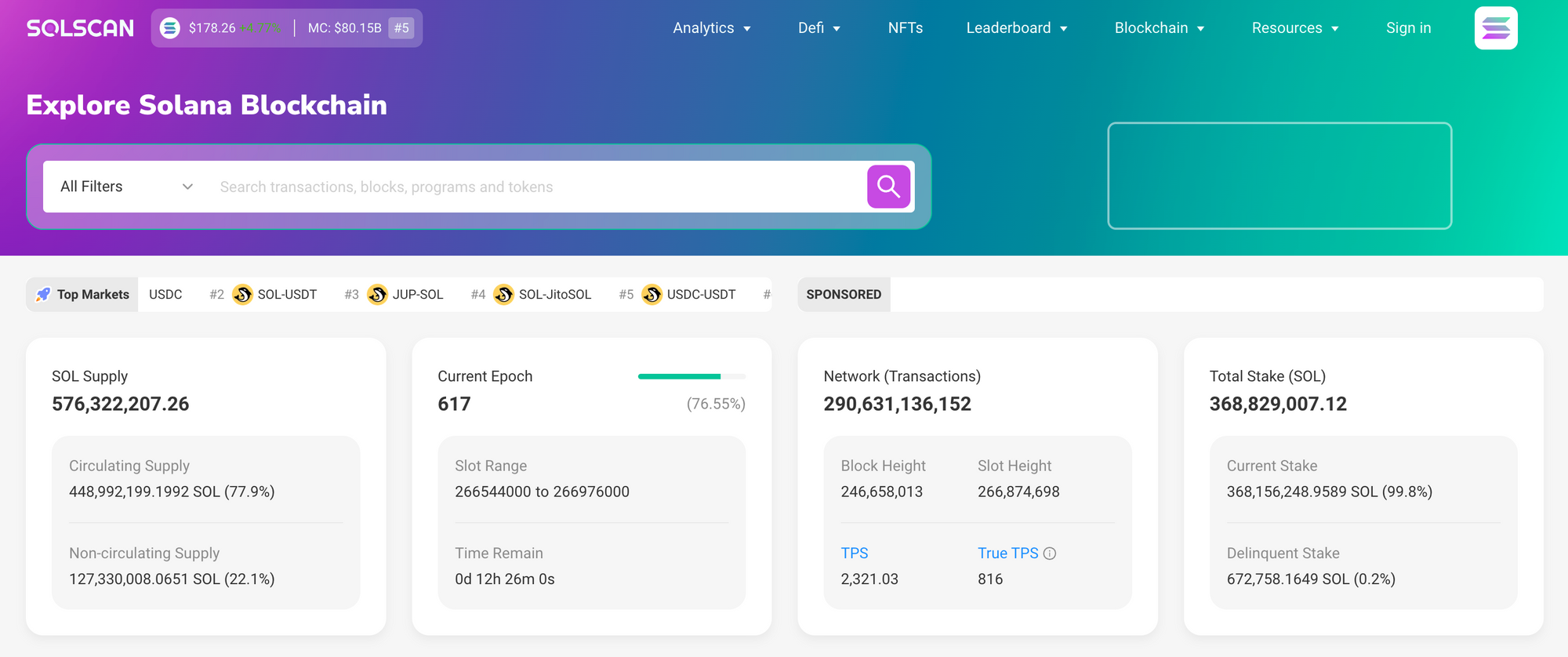
I'll be blunt: start with a trusted explorer and then cross-reference. For Solana users, one place I go to check token details is solscan explorer, because it surfaces a lot of the signals I care about without burying you in noise. It shows holder concentration, mint authority, and recent big transfers in ways that make sense to me, and it usually loads fast which matters when you want a quick read.
Wow!
Pro tip: when you click a wallet, take five seconds to scan token balances and the timing of transactions. If the wallet only interacts with a single token and does repeated transfers every hour, that could be an automated strategy or a market-making . If it's an exchange deposit pattern, you'll see larger, less frequent transfers. I'm not 100% sure you'll catch every nuance, but this helps you separate chaotic noise from likely legit behavior.
Really?
Yup. And if something looks off, dig deeper—trace the origin of the funds, check for associated program interactions, and review whether the token has a verified metadata entry. Sometimes the answer is simple: it's airdrops. Other times it's messy. (oh, and by the way…) keep screenshots; they saved me once when reporting an exploit to a project team.
Look for concentrated holders, active mint authority, sudden large transfers, and inconsistent token metadata. If multiple flags pop up together, treat the token as high risk and limit exposure. My instinct usually flags at least one weird thing; then I check timelines and holder lists before deciding.
Trust is relative. Choose an explorer with fast indexing, clear labels, and tools to inspect token mints. Cross-reference findings on a second explorer if something is unclear. I'm biased toward explorers that balance depth with readability, because frankly I don't have time for clunky tools.
illigal text removedilligal text removedilligal text removed
Whoa! The first time I scanned a token on Solana I felt like I'd peeked behind the curtain. It was fast. Very fast. At first I thought speed was the
Whoa! This space moves quick. Seriously? It does. My first impression when I dove into BNB Chain DeFi was: slick UX, low fees, and a whole lot of experimental stuff
I've used a handful of pro-grade trading platforms over the years, and Sterling Trader Pro keeps showing up in conversations with floor traders, prop desks, and some high-frequency shops. It's
The most readily useful mature hookup dating website for adults The most useful mature hookup dating internet site for grownups is a website that delivers a safe and discreet environment
Enjoy discreet and personal gay hookups with local men There are many and varied reasons why individuals enjoy discreet and private gay hookups.for some, its a way to explore their
When you are in search of Spanish cougars, it is vital to understand where to look. It may need some travel, if you could be fortunate enough to obtain an
EthiopianPersonals è considerato come quelli dating siti web, che sono orientati su un particolare target popolazione. Through the subject, è facile tieni presente che EthiopianPersonals per caso erano creati per
Los mexicanos en típicamente son conocidos por terminan siendo apasionados y llenos de vida. Si se encuentra interesado en mexicanos posteriormente esto es exactamente un sitio web eso es hecho
Citas online algún cuerpo de otra más cultura podría ser una gran aventura y cuando tu es en realidad un Hombre jamaicano estás en para un manjar. Aunque citas un
Cuando estás en bastante nuevo conexión y unas vacaciones aparece, realmente es difícil de conocer el apropiado etiqueta seguir junto con. Me gusta, estado celebración de días románticos es en
